
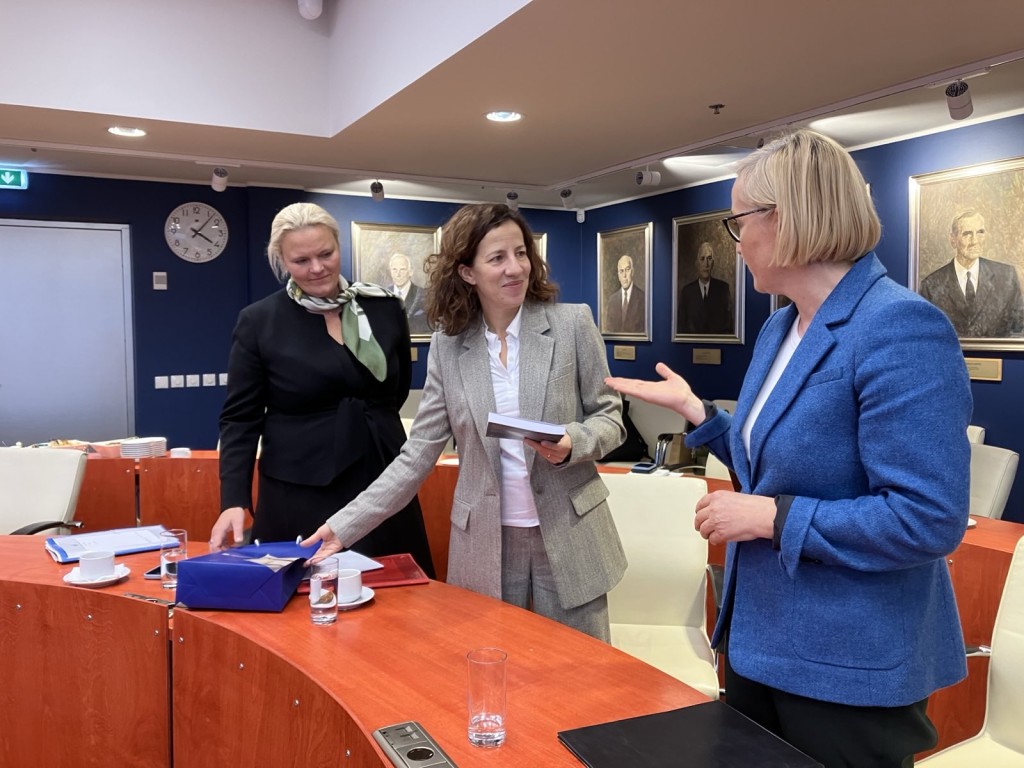
Minister Kallas underlined that Estonia wants the programme to remain flexible and that Member States should continue to have a meaningful role in shaping its content and priorities.
“Erasmus+ is one of Europe’s greatest education success stories, giving millions of people the opportunity to study and teach across borders. We must preserve Member States’ decision-making power to ensure the programme truly meets the diverse needs of all countries,” said Minister Kristina Kallas.
The meeting also discussed the European Commission’s plan to create a common European vocational education diploma, which aims to make vocational education more attractive and to improve the recognition of skills acquired in different countries. Estonia considers that, before testing such a system, Member States should reach a clear common understanding of the diploma’s added value and how it would function in practice.
During the 23 October meeting at TalTech, Minister Kallas also presented Estonia’s latest education initiatives – including the Engineering Academy and AI-Leap – and invited Vice-President Mînzatu to take part in the International Summit on the Teaching Profession (ISTP), which Estonia will host in Tallinn from 8–11 March 2026.
Erasmus+ is the European Union’s largest education programme, supporting learning mobility, teacher and student exchanges, and international cooperation between schools and universities. The proposed budget for the next programme period amounts to around €41 billion, benefiting millions of learners and educators across Europe.


