
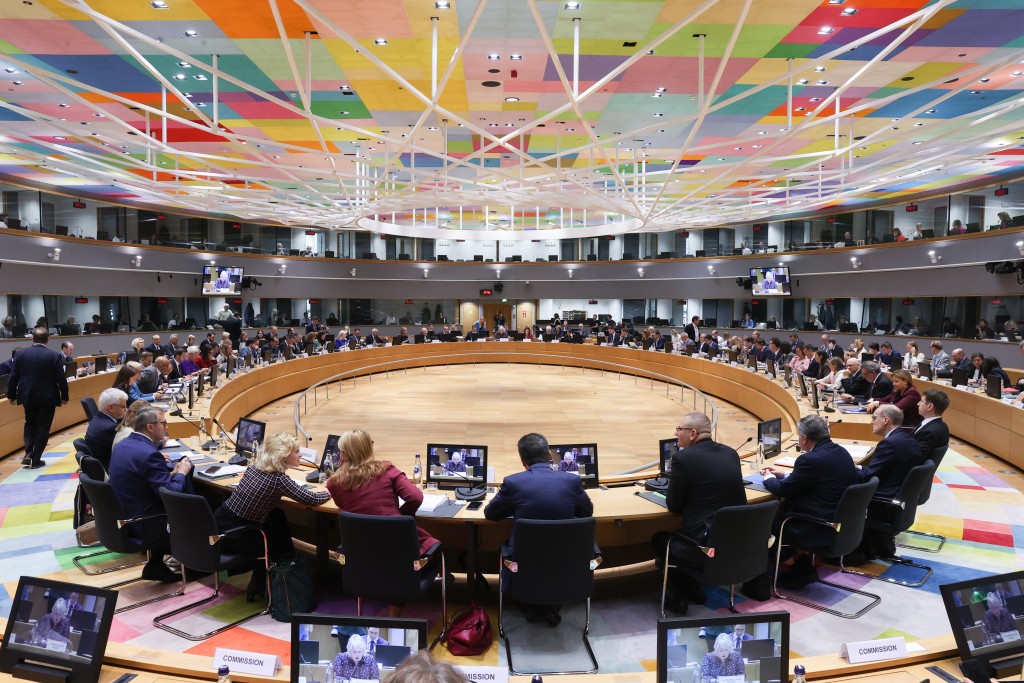
Almost all modern technologies – such as artificial intelligence, drones or satellite technologies – can be used in both civilian and defence fields. Allowing such dual-use projects to be funded under the framework programme will strengthen both Europe’s competitiveness and our collective security. Since this is first and foremost a programme for funding science, it is essential that the selection of projects is based on scientific excellence and quality, and that the expected results meet real societal needs.
At the meeting, ministers also adopted conclusions highlighting the role of research and innovation in the growth of start-ups, and conclusions calling for stronger European competitiveness in the field of life sciences. The meeting concluded with a discussion on the future of European research and technology infrastructures.
In Brussels, Minister Kristina Kallas also held bilateral meetings with Cyprus’ Minister for Research, Innovation and Digital Policy, Dr Nicodemos Damianou, and with Estonian MEP Jüri Ratas. Discussions focused on the preparation of the new framework programme and on reducing the gap in research and innovation capacity between EU Member States. It was agreed that the new programme must continue measures that help countries with smaller research capacity participate more effectively in the European Research Area.
“Estonia considers it essential that the measure supporting countries with smaller research capacity is maintained. However, its rules must be updated to encourage countries to invest more of their own resources in research and development,” said Minister Kristina Kallas. She added that Estonia is proud to have grown out of the group of countries with lower research and innovation capacity, but there should still be additional incentives for those that have significantly increased their investments in science. “This is how we create real motivation and progress,” Kallas emphasised.
The European Union is currently preparing the new Horizon Europe 2028–2034 research and innovation framework programme. This is the EU’s largest science funding instrument, with a planned budget of 175 billion euros. The programme will support thousands of projects in cutting-edge science, new technology development and international cooperation.


