
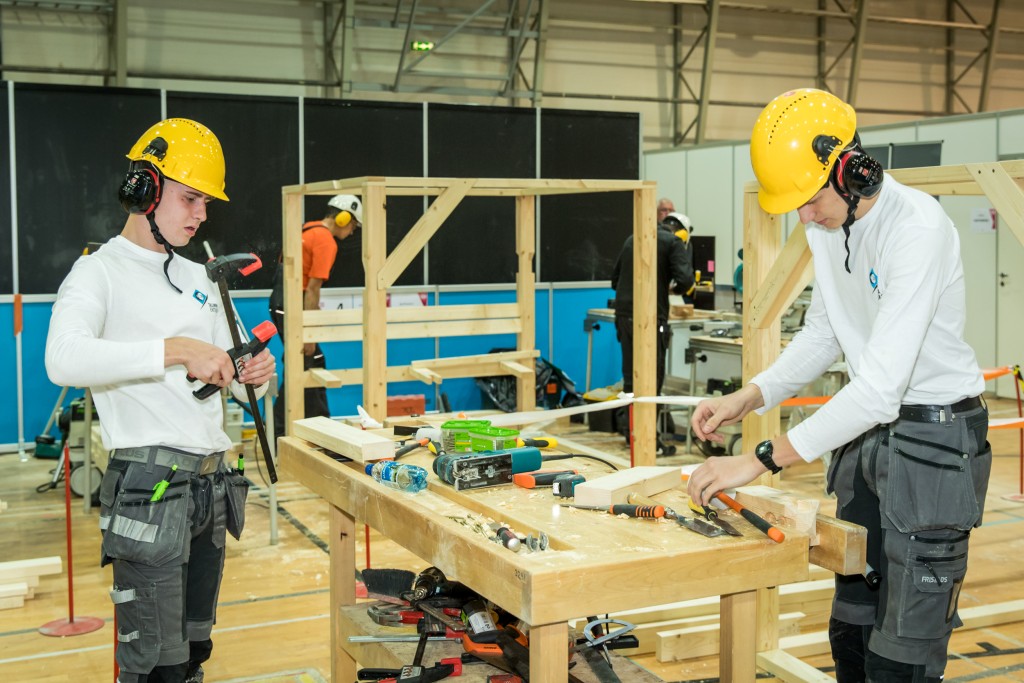
According to Renno Veinthal, Deputy Secretary General of the Ministry of Education and Research, Estonia is already a step ahead with its reforms. “The Herning Declaration confirms that all EU member states share the same ambition – to make vocational education more attractive for young people, improve its quality, and strengthen its alignment with labour market needs. It gives strong international backing to our own ongoing reforms in vocational education, the qualifications system, and compulsory schooling,” said Veinthal, adding that Estonia’s goal is for at least 40% of basic school graduates to choose VET as their upper secondary pathway by 2035.
The importance of vocational education is growing across Europe as the labour market urgently needs skills to support the green transition, digital transformation, and demographic change. Estonia faces the same challenges: a shortage of skilled workers, low attractiveness of VET, and high dropout rates. The solutions lie in investing in teachers’ and trainers’ competences to ensure high quality, offering a broader range of study programmes, strengthening cooperation with employers, and improving labour market forecasting.
Three major reforms are currently underway in Estonia that support the objectives of the Herning Declaration:
- VET reform – new modernised curricula emphasising key competences, cross-disciplinary learning, and practical skills.
- Compulsory schooling reform – the compulsory education age will be extended to 18 or until completion of upper secondary education. This will reduce dropout rates and bring around 1,300 more young people with at least secondary education into the labour market each year.
- Qualifications system reform – by 2029, the qualifications system will be modernised to link education and the world of work more flexibly and effectively.


